
World Cup 2026 Value Bets — Where the Smart Money Goes
 Available in US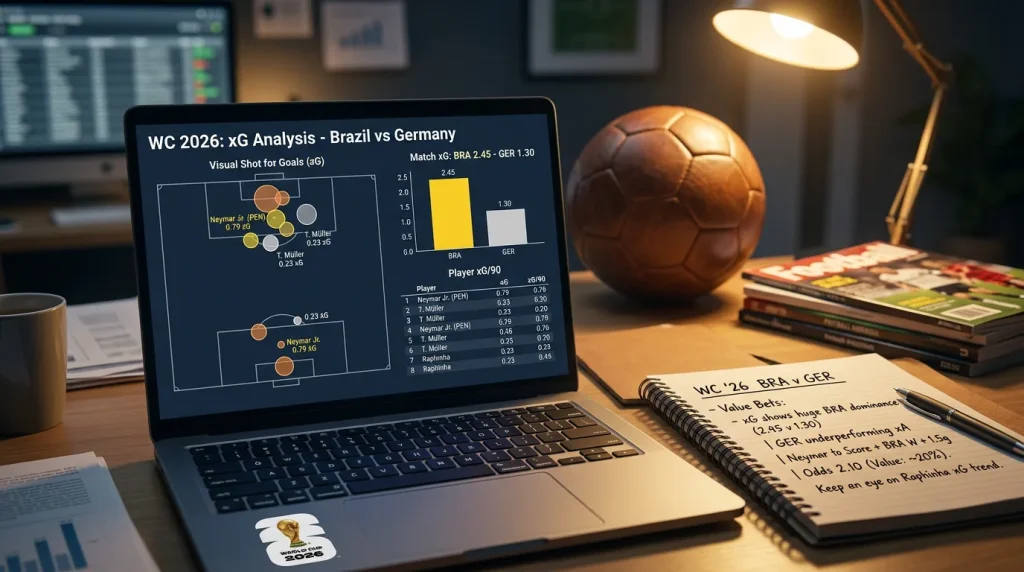
Table of Contents
The odds are wrong. Not drastically wrong, not obviously wrong, but wrong in the small margins that separate long-term winning bettors from everyone else. Every World Cup presents these opportunities — moments where public perception lags behind quantifiable reality, where emotional betting drives prices away from true probability, where the casual money flooding the market creates value for those who do the work.
I have hunted World Cup 2026 value bets since the draw ceremony in December. The expanded 48-team format changes everything about how these opportunities emerge. More matches mean more data points. More teams mean more obscure markets where bookmakers rely on limited information. Three host nations mean home advantage calculations that historical models cannot fully capture. The tournament structure itself — twelve groups instead of eight, a Round of 32 instead of Round of 16 — creates pricing inefficiencies that will persist until kickoff and possibly beyond.
Value betting is not about picking winners. Value betting is about finding prices that exceed your calculated probability. A 4.00 dog can represent value at 4.00 and terrible value at 3.50. The distinction matters more than the outcome of any individual bet. This analysis identifies where I believe the bookmakers have mispriced the 2026 World Cup, backed by the methodology I have refined across nine years of tournament analysis.
How We Find Value — xG, Form, and Market Inefficiency
Most bettors pick teams they like and hope the odds work out. I start from the opposite direction. I calculate what the odds should be, then compare that calculation to what the market offers. The gap between those numbers determines whether value exists.
Expected goals — xG — forms the foundation of my methodology. For those unfamiliar, xG assigns a probability value to every shot based on historical conversion rates for similar opportunities. A penalty carries an xG of roughly 0.76 because penalties convert 76% of the time historically. A header from outside the six-yard box might carry an xG of 0.03. Aggregate these values across a match and you get a truer picture of which team created the better chances, independent of whether those chances converted.
For international tournaments, I weight xG data from the qualification cycle more heavily than club-level production. International matches feature different defensive structures, different pressing intensities, and different player combinations than club football. A striker scoring thirty goals in league play tells me less about World Cup production than six goals in twelve qualifiers. The context of international football is simply different, and my model accounts for that context.
Expected goals against — xGA — matters equally. Tournament football rewards defensive solidity over attacking brilliance in most cases. The teams that reach semi-finals and finals typically concede fewer than three goals across six or seven matches. My model identifies teams whose xGA suggests defensive improvement not yet reflected in market prices. Teams that shipped goals in qualifying due to bad luck rather than poor defending often represent value when markets price them based on actual goals conceded rather than expected goals conceded.
Form analysis requires nuance in the international context. A team on a six-match winning streak in friendlies may be less impressive than a team that lost competitive matches narrowly to elite opposition. I weight competitive fixtures — World Cup qualifiers, continental championships, Nations League — far more heavily than friendlies regardless of result. A March friendly against a top ten nation tells me more than five consecutive wins against teams ranked sixtieth or lower.
Market inefficiency emerges from several predictable sources in World Cup betting. Public bias toward recent memory overweights the last tournament — Croatia reached the semi-finals in 2022, so Croatia must be a contender in 2026, regardless of how much their squad has changed. Media narrative creates self-fulfilling prophecy pricing where heavily covered teams attract casual money regardless of underlying quality. Geographic bias means Canadian bettors will hammer Canada lines while European books see less action, creating cross-market arbitrage opportunities. Each of these inefficiencies represents potential value for bettors willing to fade public sentiment.
Outright Value — Tournament Long Shots
The outright winner market is where recreational money concentrates most heavily. Brazil, Argentina, France, England — the public backs what they know, and bookmakers adjust prices accordingly. The value lies not in these favourites but in the second tier of contenders where market attention is thinner and pricing less efficient.
Germany at 12.00 to 15.00 odds represents my strongest outright value conviction. The German national team exited the 2022 World Cup at the group stage, their earliest elimination in tournament history. Public perception has not yet recovered from that embarrassment. But Germany has quietly rebuilt under Julian Nagelsmann, posting a positive goal difference of eighteen across their last ten competitive fixtures. Jamal Musiala has emerged as a genuine world-class talent. The midfield depth — Florian Wirtz, Joshua Kimmich, İlkay Gündoğan — rivals any in the tournament. Germany faces no legitimate threat in Group E, where Ecuador and Ivory Coast represent the only competition. A knockout bracket beginning with likely matches against Turkey or Australia creates a realistic path to the semi-finals. At 12.00 to 15.00, the implied probability of roughly 7% to 8% understates what I calculate as closer to 12% to 14% true probability. The edge is meaningful.
Portugal at 10.00 to 12.00 odds offers similar value for slightly different reasons. The Portuguese squad depth is staggering: Cristiano Ronaldo may or may not participate heavily, but Rafael Leão, Bruno Fernandes, Bernardo Silva, João Cancelo, Rúben Dias, and emerging talents like António Silva could field two competitive starting elevens. Portugal consistently produces in knockout tournaments — Euro 2016 champions, Nations League winners in 2019, World Cup quarter-finalists in 2022 despite relatively poor play. Group K poses no serious threat. A knockout path likely beginning against Uzbekistan or DR Congo before meeting an African or North American opponent in the quarter-finals is manageable. Portugal at 10.00 implies 10% probability; I calculate 14% to 16%.
Netherlands at 15.00 to 18.00 odds enters the value conversation despite inconsistent recent performances. The Dutch tendency to peak at World Cups — third place in 2014, quarter-finals in 2022 — suggests a historical comfort with the tournament format. Cody Gakpo emerged as a genuine star in Qatar. The defensive spine has solidified. Group F requires navigation past Japan, a legitimate threat, but the Dutch should emerge as group winners nonetheless. At 15.00 to 18.00, the 6% to 7% implied probability is conservative given Dutch tournament history and current squad quality. I calculate approximately 9% to 10% true probability.
Colombia at 40.00 to 50.00 odds falls into the speculative value category. Missing the 2022 World Cup hurt Colombia’s reputation disproportionately — they lost their final qualifying match to Peru when a draw would have been sufficient, hardly a catastrophic failure. The squad contains genuine quality: Luis Díaz, James Rodríguez still capable of magic, emerging talents in midfield. Group K requires finishing ahead of Uzbekistan and DR Congo, which should be straightforward. A knockout path potentially featuring European second-place finishers rather than group winners creates opportunity. At 40.00 to 50.00, the 2% to 2.5% implied probability is roughly fair, but peak Colombia performs above that level. A small position makes sense.
Group Stage Value — Mispriced Qualifiers
The expanded tournament format significantly changes group stage betting mathematics. Twenty-four of forty-eight teams will advance — the top two from each group plus eight best third-place finishers. This nearly guarantees that any team finishing with four or more points qualifies, and even three points with a reasonable goal difference might suffice for third-place advancement.
Canada to qualify from Group B at 1.65 to 1.80 odds represents the strongest group stage value I have identified. The implied probability of roughly 56% to 60% fails to adequately price home advantage across all three matches. BMO Field and BC Place will feature passionate, overwhelming home support. Canada faces Switzerland (ranked around fifteen, but beatable), Qatar (disappointing 2022 hosts), and Bosnia and Herzegovina (playoff qualifiers who eliminated Italy through penalties). My model assigns Canada approximately 68% to 72% probability of group qualification when properly weighting venue advantage and the favourable draw. The gap between market price and true probability is significant.
Turkey to qualify from Group D at 2.20 to 2.50 odds offers interesting value behind the United States. Turkey earned their place through a difficult playoff route, suggesting a team that performs under pressure. Group D contains the USA as clear favourites, but the battle for second place among Turkey, Australia, and Paraguay is more competitive than prices suggest. Turkey’s young squad includes quality from top European leagues. At 2.20 to 2.50, the 40% to 45% implied probability is conservative; I calculate closer to 50% true probability for Turkish advancement.
Senegal to finish top two in Group I at 2.40 to 2.80 odds prices the African champions appropriately behind France but undervalues them relative to Norway and Iraq. Senegal reached the Round of 16 in 2022 and has maintained their core squad. Sadio Mané has declined from his peak, but Senegalese football production does not depend on a single player. The defensive structure remains sound. At 2.40 to 2.80, the 36% to 42% implied probability for top two finish understates what I calculate as approximately 50% true probability given Iraq’s limitations and Norway’s tactical inflexibility against disciplined opposition.
Morocco to top Group C at 4.00 to 5.00 odds enters value territory only because of Brazil’s presence. Morocco will almost certainly finish second behind Brazil, pricing at 1.40 to 1.50. But if Brazil rotates players early, if injuries strike, if Morocco simply catches them on a good day — the Moroccans could steal first place. At 4.00 to 5.00, the 20% to 25% implied probability fairly reflects the difficulty of beating Brazil head-to-head. However, the bet offers outsized returns if you believe Brazil will manage workload in the group stage knowing qualification is assured.
Prop Bet Value — Top Scorer, Cards, Corners
Proposition bets offer both the highest potential value and the greatest traps in World Cup betting. Bookmakers maintain smaller edges on prop markets because they receive less volume, but those same markets feature thinner liquidity and wider bid-ask spreads. Navigate carefully.
Golden Boot betting tends to overvalue proven tournament scorers and undervalue attacking players from teams expected to play many matches. The math is straightforward: reaching the final guarantees seven matches of opportunity. Group stage elimination caps opportunity at three matches regardless of individual quality. My approach weights team tournament progression probability against individual scoring rate rather than simply backing the best striker.
Kylian Mbappé at 6.00 to 8.00 odds for Golden Boot represents fair value rather than exceptional value. France should reach at least the semi-finals, providing six or seven matches. Mbappé creates his own chances and does not rely on service. Eight goals would likely win the Golden Boot in an expanded tournament with more total matches but more variance in individual scoring. The price appropriately discounts the risk of injury or poor form.
Vinícius Jr. at 10.00 to 12.00 odds offers slightly better value given Brazil’s favourable draw and his central role in their attack. Brazil will score heavily against Haiti and Scotland in the group stage. If Vinícius captures two or three goals before the knockout rounds, he enters the Golden Boot race with momentum and opportunities.
Harry Kane at 12.00 to 15.00 odds for Golden Boot potentially offers value if you believe England reaches the final. Kane has won the Golden Boot before, at the 2018 World Cup with six goals including a hat-trick against Panama. England’s path through Group L could feature similar opportunities against Panama and Ghana. The question mark around Kane’s continuing presence in the England setup creates price depression I believe is overdone.
Jonathan David at 60.00 to 80.00 odds for Golden Boot enters speculative territory but is not unreasonable. Canada playing all group matches at home, with David as the focal point of the attack, could see him bag four or five group stage goals if things break right. A deep Canadian run extending that goal count is unlikely but possible. At 60.00 to 80.00, the bet costs little and pays enormously if the dream scenario materializes.
Team total goals markets are where I find the most consistent value. Bookmakers set lines based on historical averages and obvious factors like opponent quality. They often miss matchup-specific dynamics where two teams’ styles particularly clash or complement each other. I target the group stage predictions where my model suggests significant over or under potential based on tactical analysis.
Brazil over 2.5 goals against Haiti — likely priced around 1.60 to 1.70 — is almost certain to hit. Brazil will likely start close to their strongest eleven despite the mismatch. Haiti lacks the defensive organization to contain Vinícius, Rodrygo, and supporting attackers. Four or five goals is realistic; three or more is probable.
Value Bets on Canada — The Home Team Angle
Canadian bettors face a unique situation at this World Cup. Our national team plays all three group stage matches on home soil, a circumstance that historical models cannot fully capture because it has never happened before. Previous World Cups featured single host nations or two co-hosts sharing matches. Three hosts across two continents is unprecedented.
The academic literature on home advantage in soccer suggests a goal differential benefit of roughly 0.4 to 0.5 goals per match at the international level. This advantage compounds across three matches to approximately 1.3 to 1.5 additional goals for or fewer goals against over the group stage. Translated into win probability, home advantage adds roughly 10% to 15% to Canada’s chances in each individual match. The market has priced some of this in but, based on my analysis, not enough.
Canada to beat Bosnia and Herzegovina in the opening match — likely priced around 1.90 to 2.10 — represents genuine value. Bosnia qualified through playoffs, meaning less cohesive preparation than teams that qualified directly. The opening match energy at BMO Field will be extraordinary. Canada historically performs well in home qualifiers and competitive fixtures. At 1.90 to 2.10, the implied probability of 48% to 53% for Canadian victory understates what I calculate as 55% to 60% true probability when properly weighting venue advantage and opponent fatigue from playoff exertion.
Canada versus Qatar draw no bet at 1.65 to 1.80 odds eliminates the pushed stake if the match ends level while paying if Canada wins. Qatar struggled mightily as World Cup hosts in 2022, losing their opening match to Ecuador and failing to score in the group stage. Their form since has not suggested dramatic improvement. Canada should win this match outright, but draw no bet provides insurance while maintaining value.
Canada top Group B at 4.50 to 5.50 odds is the high-upside home team value bet. This requires Switzerland to drop points — possible against Qatar, who beat Argentina in 2022 and could produce similar upset magic. If Canada wins their first two matches and Switzerland draws or loses one, the final matchday becomes a straight competition for first place. At 4.50 to 5.50, the 18% to 22% implied probability conservatively prices a scenario where momentum and home advantage combine to elevate Canada above expectations.
Alphonso Davies to score anytime across the tournament at 1.80 to 2.00 odds prices Canada’s star player appropriately for his goal-scoring history while accounting for his position as a left-sided attacker rather than central striker. Davies has scored crucial goals in qualifiers and will feature prominently in Canada’s attack. Three home matches against beatable opposition creates opportunity. At 1.80 to 2.00, the bet requires only one Davies goal across potentially four to seven matches if Canada advances from the group.
World Cup 2026 value bets reward preparation and patience. The opportunities I have outlined will evolve as the tournament approaches — injuries change pricing, form fluctuations adjust probabilities, media narratives create new inefficiencies to exploit. Monitor these markets through the spring. Position early where you see significant edge. Remain disciplined when value disappears. The goal across thirty-nine days of tournament football is not to win every bet but to consistently find prices that exceed true probability. Do that, and the long-term math takes care of itself.
