
BMO Field — Toronto’s World Cup 2026 Venue
 Available in US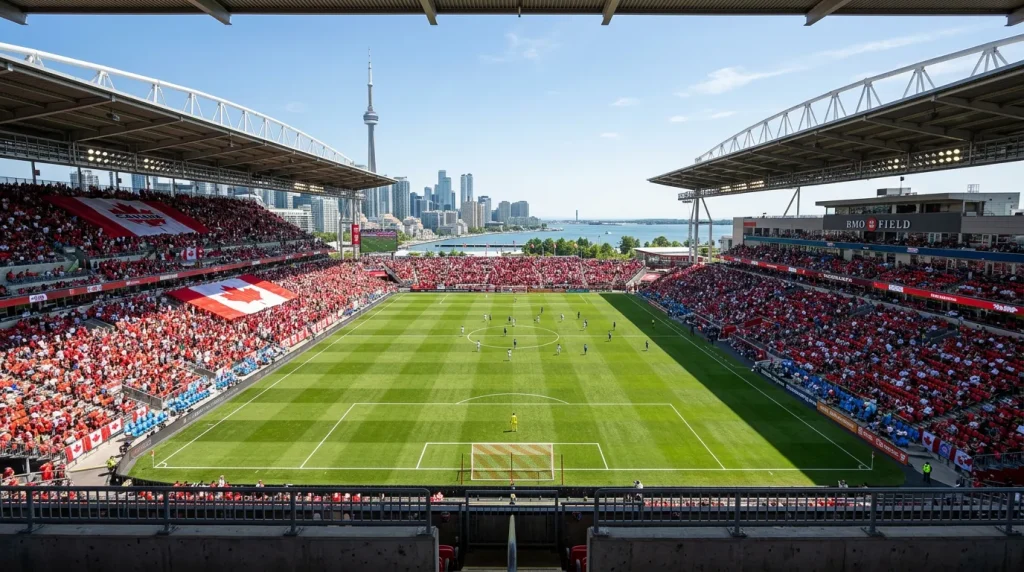
Table of Contents
I have attended matches at BMO Field since its opening in 2007, watching Toronto FC grow from expansion curiosity to MLS Cup champions. Nothing I witnessed in those years compares to what will happen on June 12, 2026, when Canada opens their World Cup campaign against Bosnia & Herzegovina in front of 30,000 screaming supporters. The intimate confines of BMO Field — originally built for 20,000, expanded multiple times since — will generate an atmosphere that larger stadiums cannot replicate. This is not a neutral venue hosting a tournament match. This is Canada’s home pitch for the most important soccer matches in the country’s history.
BMO Field occupies a unique position among the sixteen North American World Cup venues. It is the smallest stadium in the tournament by a significant margin, but that limitation becomes a strength when atmosphere matters more than capacity. The steep sight lines, close proximity to the pitch, and passionate supporter sections create an intimidating environment for visiting teams. Bosnia & Herzegovina qualified by shocking Italy on penalties in Sarajevo — they know hostile crowds. BMO Field on June 12 will test that resolve in ways European playoff matches cannot match.
For Canadian bettors analyzing home advantage, understanding BMO Field matters. The venue characteristics — compact dimensions, natural grass surface, lakeside weather patterns — all factor into match predictions. This is not a dome or a cavernous stadium where crowd noise dissipates into architecture. Every cheer, every song, every collective roar reaches the pitch with full force. That environment provides measurable value when assessing Canada’s World Cup odds.
About BMO Field
BMO Field opened on April 28, 2007, as Toronto FC’s home ground and the first soccer-specific stadium in Canada. The original design seated just over 20,000, with the pitch and stands oriented to maximize atmosphere over absolute capacity. The location — Exhibition Place, on the Toronto waterfront south of downtown — connected the stadium to the city’s entertainment district while providing transit accessibility and parking infrastructure.
The venue has undergone multiple expansions since opening. South stands were added first, followed by east-side seating that pushed capacity toward 30,000. For the 2026 World Cup, FIFA-required modifications include additional temporary seating, enhanced media facilities, and upgraded broadcast infrastructure. The current tournament capacity sits at approximately 30,000 — making it the smallest of the sixteen host venues but still appropriate for group stage matches.
The playing surface is natural grass, maintained to FIFA standards throughout the MLS season and into World Cup preparation. Toronto’s climate presents challenges — late spring conditions can range from sunshine and warmth to rain and cool winds within days — but the grounds crew has decades of experience managing the surface. The pitch dimensions meet international standards, with adequate runoff areas for player safety during high-intensity tournament football.
Infrastructure improvements for 2026 include updated concourse areas, enhanced accessibility features, and FIFA-standard video replay facilities. The venue already meets most requirements from its MLS and Canadian national team hosting history, minimizing construction disruption compared to stadiums requiring significant renovation. BMO Field will be ready well in advance of June 2026.
The stadium shares Exhibition Place with Budweiser Stage (a concert amphitheater), Enercare Centre (a convention facility), and the Canadian National Exhibition fairgrounds. This cluster of venues creates logistical complexity on event days but also provides overflow space for fan festivals and gathering areas. The waterfront location offers views of Lake Ontario and access to the Martin Goodman Trail for pre-match walks.
World Cup 2026 Matches at BMO Field
BMO Field hosts a limited number of World Cup 2026 matches, reflecting both its capacity constraints and the tournament’s distribution model across sixteen venues. The confirmed matches place Canada’s group stage opener in Toronto, ensuring maximum home advantage for the critical first fixture:
| Date | Match | Round | Time (ET) |
|---|---|---|---|
| June 12, 2026 | Canada vs Bosnia & Herzegovina | Group B – Matchday 1 | 3:00 PM |
| June 14, 2026 | Group Stage Match (To Be Confirmed) | Group Stage – Matchday 1 | To Be Confirmed |
| June 19, 2026 | Group Stage Match (To Be Confirmed) | Group Stage – Matchday 2 | To Be Confirmed |
| June 25, 2026 | Group Stage Match (To Be Confirmed) | Group Stage – Matchday 3 | To Be Confirmed |
| July 1, 2026 | Round of 32 Match (To Be Confirmed) | Knockout Round | To Be Confirmed |
The Canada versus Bosnia & Herzegovina fixture carries the most significance for Canadian supporters. This is the opening match of Canada’s tournament, contested on home soil in the country’s largest city. The 3:00 PM ET kickoff allows for coast-to-coast viewing during reasonable hours — 12:00 PM PT on the West Coast, 4:00 PM AT in Atlantic Canada.
The additional group stage matches at BMO Field will feature other Group B nations and potentially teams from adjacent groups. FIFA scheduling aims to distribute matches evenly across venues while minimizing travel disruption for competing nations. The Round of 32 fixture provides Toronto with knockout round football, though the specific teams depend on group stage outcomes.
For bettors, the BMO Field schedule creates opportunities. The Canada home opener represents maximum home advantage — 30,000 supporters, afternoon kickoff for optimal energy, and a nation watching. The other matches at the venue will feel more neutral, though Canadian supporters may still outnumber opponents for non-Canadian group fixtures.
Toronto as a World Cup Host City
Toronto — Canada’s largest city with a metropolitan population exceeding six million — brings world-class infrastructure, multicultural demographics, and genuine soccer passion to its World Cup hosting duties. The city has hosted major international events before, including the 2015 Pan American Games and countless international friendlies, but nothing approaches the scale and significance of World Cup matches.
The soccer culture in Toronto runs deeper than casual observers might assume. Beyond Toronto FC’s passionate supporter base — the Red Patch Boys, U-Sector, and other groups — the city contains massive diaspora communities invested in World Cup outcomes. Italian-Canadians in Woodbridge and College Street, Portuguese-Canadians in Little Portugal and Dundas West, Croatian-Canadians in Mississauga and the Junction — every major European football nation has representation in the Greater Toronto Area.
The 2026 World Cup will transform the city during the tournament weeks. Fan festivals in downtown locations, outdoor viewing areas, and spontaneous celebrations will fill the urban landscape. The Yonge-Dundas Square area, the waterfront, and various ethnic neighbourhoods will serve as gathering points for supporters of competing nations.
Hotels within the downtown core and near Exhibition Place will experience high demand during match weeks. Booking accommodation early is essential for fans planning to attend BMO Field fixtures. The entertainment district surrounding the stadium — King West, Liberty Village, Parkdale — offers dining and nightlife options before and after matches.
Toronto’s June weather typically features warm temperatures, occasional rain, and humidity. Expect highs around 20-25°C with afternoon sun for the 3:00 PM kickoffs. The lakeside location provides some breeze relief, but supporters should prepare for variable conditions. Sunscreen and rain layers both belong in the matchday kit.
Getting to BMO Field — Transit and Tips
BMO Field occupies a convenient but sometimes congested location at Exhibition Place, roughly three kilometres southwest of downtown Toronto. Multiple transit options provide access, though advance planning improves the matchday experience considerably.
The TTC streetcar offers the most reliable transit option. The 509 Harbourfront and 504 King routes serve the Exhibition loop directly, with frequent service from Union Station and points along King Street. The journey from Union Station takes approximately 15-20 minutes under normal conditions, though World Cup matchdays will likely see extended travel times due to crowding.
The UP Express from Pearson Airport connects to Union Station, providing seamless transit for visitors arriving by air. The 25-minute express service runs every 15 minutes and offers luggage accommodation. From Union Station, transfer to the Exhibition streetcar or walk the approximately 30 minutes through the entertainment district.
Driving to BMO Field is possible but not recommended on matchdays. Parking at Exhibition Place exists but fills quickly for major events. Street parking in surrounding neighbourhoods faces restrictions and competition. Ride-sharing services function but encounter surge pricing and drop-off congestion near the venue.
For those walking from downtown, the route follows Lake Shore Boulevard West or the Martin Goodman Trail along the waterfront. The walk from Union Station takes approximately 40 minutes at a relaxed pace and offers views of the Toronto skyline. This option works well for pre-match atmosphere, though post-match walks on tired legs may feel longer.
My recommendation: arrive early. BMO Field gates typically open 90 minutes before kickoff for major events. The concourse areas offer concession options, the views from inside the stadium reward early arrival, and the atmosphere builds throughout the waiting period. For a 3:00 PM kickoff, plan to be at the venue by 1:30 PM at the latest.
What to Expect on Matchday
BMO Field matchdays during the World Cup will combine familiar Toronto FC elements with FIFA tournament protocols. The basic structure — security screening, ticket scanning, concourse access — remains similar to regular MLS matches, but intensity and crowd sizes elevate everything.
Security screening follows FIFA standards, which typically exceed MLS protocols. Expect bag size restrictions, prohibited item lists, and potential delays entering the venue. Clear bags often expedite the process. Large banners and flags may require pre-approval or face confiscation at entry points.
The supporter atmosphere at BMO Field relies on the south end supporter sections, where organized groups lead chants and create tifo displays. For Canada matches, expect the entire stadium to participate in supporter culture rather than sitting passively. The intimacy of the venue means everyone can hear the songs and contribute to the noise.
Concession options include standard stadium fare — hot dogs, burgers, nachos — along with beer and soft drinks. Prices follow typical major event stadium markups. For more interesting food options, the surrounding neighbourhoods offer superior choices before or after the match. Parkdale and Liberty Village both sit within walking distance.
The post-match experience depends on the result. A Canada victory will see supporters flooding into the streets around Exhibition Place for celebrations. The nearby bars and restaurants along King Street West will be packed. A disappointing result may see quicker dispersals and quieter surroundings. Either way, the streetcar lines back to downtown will be crowded — patience is essential.
For complete coverage of Canada’s World Cup campaign and how the BMO Field home advantage factors into betting analysis, see our Canada national team betting guide.
