
World Cup 2026 Group A — Mexico, South Korea, South Africa, Czechia
 Available in US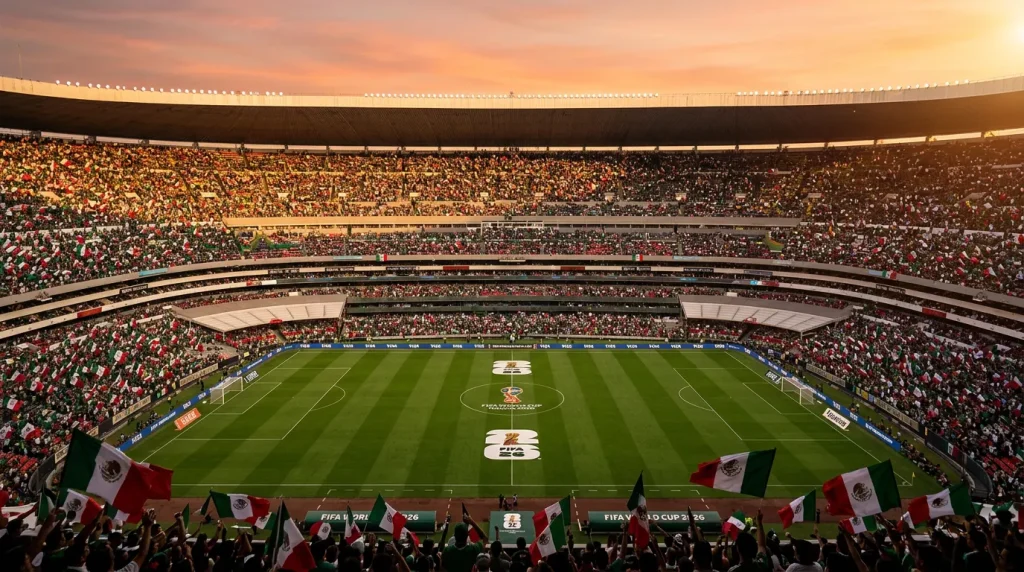
Table of Contents
June 11, 2026. Estadio Azteca. Mexico versus South Africa. The opening whistle of the largest World Cup in history will sound in the same stadium where Diego Maradona lifted the trophy in 1986 — and the magnitude of that moment is not lost on anyone who follows this sport. Group A kicks off the 2026 tournament with a co-host nation desperate to break their Round of 16 curse, a resurgent South Korea carrying memories of their 2002 semi-final run, an African qualifier with nothing to lose, and a Czech side that navigated European playoffs to secure their spot.
From a Canadian perspective, Group A offers lessons about what awaits in the knockout rounds. If Canada advances from Group B as expected, they could face a Group A team in the Round of 32. Mexico and South Korea both represent potential opponents in the bracket, and understanding their strengths now will pay dividends later. South Africa and Czechia, meanwhile, profile as underdog stories worth monitoring — their performances will set the tone for how the expanded 48-team format treats first-time qualifiers and playoff winners.
I have tracked El Tri through countless Hexagonal and Nations League campaigns over my nine years as an analyst. This Mexican generation sits at a crossroads. Their golden generation — Guardado, Ochoa, Herrera — is fading, while the next wave has yet to fully establish itself. Hosting provides a lifeline, but the pressure that comes with it has undone Mexican World Cup dreams before. The last time Mexico hosted a World Cup, they exited in the quarter-finals on penalty kicks against Germany. That was 1986.
Group A Teams Breakdown
Four nations from four different confederations converge in Group A. This geographic diversity creates fascinating tactical and stylistic contrasts — CONCACAF physicality meets Korean dynamism, European precision, and African unpredictability.
Mexico enters as overwhelming favorites and carries the burden of host nation expectations. El Tri have reached the Round of 16 in seven consecutive World Cups, but have advanced beyond that stage only twice in history — both times as hosts in 1970 and 1986. The “quinto partido” curse — the fifth match that Mexico can never win — haunts this national team program. Playing at home adds both opportunity and pressure.
The current Mexican squad blends domestic Liga MX talent with European-based players. Hirving Lozano remains the most recognizable name internationally, though his career has plateaued since his Napoli days. Santiago Giménez has emerged as a genuine goal threat, leading the line at Feyenoord with consistent production. The midfield includes Luis Romo and Edson Álvarez, both capable of controlling tempo against non-elite opponents.
South Korea brings the most tournament pedigree outside of Mexico. The Taegeuk Warriors have qualified for ten consecutive World Cups and produced one of the greatest tournament runs in history during their 2002 co-hosting alongside Japan. That fourth-place finish remains a source of enormous national pride, and the Korean Football Association has deliberately built toward replicating that success in North America.
Son Heung-min captains a South Korean squad that blends pace, technical quality, and tactical discipline. At 33, Son remains one of Asia’s finest players, capable of deciding matches individually. Behind him, Lee Kang-in has developed into a creative force at Paris Saint-Germain, while Kim Min-jae anchors the defense with experience from top European leagues. Korea profiles as the most dangerous second-place threat to Mexico.
South Africa earned their World Cup place through the African qualifiers, returning to the tournament for the first time since hosting in 2010. Bafana Bafana have undergone a genuine resurgence under Hugo Broos, developing a younger squad that plays with attacking intent and defensive organization. Percy Tau and Themba Zwane provide creativity, though the overall squad depth remains limited compared to CONCACAF and European opponents.
The South African challenge is maintaining intensity across three group matches in North American conditions. Travel distances, climate differences, and supporter absence all work against them. However, the opening match against Mexico offers a defining opportunity — the 2010 hosts opened their tournament with a 1-1 draw against Mexico, and history could repeat.
Czechia qualified through the European playoffs, navigating a challenging path that confirmed their tournament readiness. The Czech squad lacks star power but compensates with collective organization and set-piece quality. Patrik Schick provides goal threat from the center-forward position, having demonstrated his World Cup caliber at Euro 2020 with spectacular strikes. Tomáš Souček offers Premier League experience in midfield, while the defensive unit prioritizes shape over individual brilliance.
The Czech approach will be familiar to anyone who has watched their recent tournament campaigns. They will frustrate opponents, remain compact, and wait for opportunities to strike on counters or set pieces. Against Mexico and South Korea, this could prove effective enough to steal points. Against South Africa, they represent favorites in a match that could determine third-place standing.
Group A Match Schedule
Group A provides the ceremonial opening of the 2026 World Cup. The scheduling places Mexico in the prestigious opening fixture, with subsequent matches distributed across American venues to maximize local interest and television audiences.
| Date | Match | Venue | Time (ET) |
|---|---|---|---|
| June 11, 2026 | Mexico vs South Africa | Estadio Azteca, Mexico City | 5:00 PM |
| June 12, 2026 | South Korea vs Czechia | SoFi Stadium, Los Angeles | 9:00 PM |
| June 17, 2026 | Mexico vs South Korea | AT&T Stadium, Dallas | 8:00 PM |
| June 17, 2026 | South Africa vs Czechia | Levi’s Stadium, San Francisco | 5:00 PM |
| June 23, 2026 | Czechia vs Mexico | AT&T Stadium, Dallas | 3:00 PM |
| June 23, 2026 | South Korea vs South Africa | SoFi Stadium, Los Angeles | 3:00 PM |
The venue selection works heavily in Mexico’s favor. Estadio Azteca needs no introduction — 87,000 supporters creating an atmosphere that few stadiums worldwide can match. Dallas and its substantial Mexican-American population will transform AT&T Stadium into a home environment for El Tri. Even the neutral venues in Los Angeles and San Francisco contain significant Latino communities who will support Mexico over European or Asian opponents.
South Korea benefits from the West Coast scheduling, with Los Angeles home to a large Korean diaspora. The SoFi Stadium matches will feature substantial Korean support, partially offsetting the travel disadvantage. For South Africa and Czechia, the environment will feel genuinely neutral — which represents an improvement over playing in overtly hostile host nation venues.
Match-by-Match Preview
The Group A fixtures offer distinct tactical battles and betting angles. Let me break down each match with attention to form, matchup dynamics, and market considerations.
Mexico versus South Africa opens the entire tournament, and opening matches historically produce cautious football. Neither team wants to begin with a loss, and the pressure on Mexico as hosts will be immense. I expect El Tri to control possession but struggle to break down organized South African defending. The 2010 opening match ended 1-1, and a similar result would not surprise me in 2026.
South Korea versus Czechia represents the second Group A fixture, and this match carries significant implications for both teams. Korea enters as favorites given their superior talent and tournament experience. The Czech defensive approach may frustrate Son Heung-min and company, but I expect Korean quality to prevail in a tight 1-0 or 2-1 victory.
Mexico versus South Korea is the marquee Group A fixture. Both teams will likely enter with three points from their openers, making this match decisive for group supremacy. The Dallas atmosphere should favor Mexico, but South Korea has upset host nations before — they eliminated Germany in 2018 and reached the semi-finals as co-hosts in 2002. This could be a high-quality, tight encounter with draw potential.
South Africa versus Czechia pits the two underdogs against each other in what amounts to a mini-final for third place. Both teams could be winless entering this match, making it crucial for any slim third-place qualification hopes. I give Czechia a slight edge given their European pedigree and set-piece quality, but South Africa possesses enough attacking talent to make this competitive.
The final matchday features Czechia versus Mexico and South Korea versus South Africa in simultaneous kickoffs. Mexico should handle Czechia comfortably if group positioning is already secured. South Korea faces a South African team that may be eliminated, making the Korean path to three points relatively clear. The expected outcomes would cement Mexico first and South Korea second.
Group A Odds and Betting Angles
The betting market for Group A reflects clear expectations. Mexico to win the group is priced around 1.40-1.50 decimal at most sportsbooks, representing approximately 65-70% implied probability. This is short but justified — the home advantage, squad quality, and favorable draw make Mexico the overwhelming favorite.
South Korea to finish second typically prices around 1.80-2.00, while South Korea to win the group outright offers better value at 4.00-5.00 for those who believe they can upset Mexico. I consider the group winner market a potential value opportunity — Mexico’s history of underperforming at World Cups, even as hosts, creates scenarios where Korea capitalizes.
South Africa and Czechia qualification odds reflect longshot status. Both teams typically price above 4.00 simply to qualify for the knockout rounds, and their to-win-group odds exceed 20.00. These are lottery tickets rather than serious investments, though the expanded 48-team format does improve third-place qualification chances.
The most interesting betting angle in Group A involves the opening match. Mexico versus South Africa draw odds typically sit around 3.50-4.00, which represents value given historical opening match patterns. Seven of the last ten World Cup opening matches have produced draws or one-goal margins. The pressure on Mexico and South Africa’s defensive discipline make a low-scoring affair probable.
For total goals markets, Group A profiles as moderately high-scoring. Mexico’s attacking intent and South Korea’s pace should generate chances, while South Africa and Czechia both play open enough to concede. I lean toward over 8.5 total group goals, though this depends heavily on the competitiveness of individual matches.
Team-specific prop markets offer additional angles. Son Heung-min to score anytime in any group match typically prices around 1.50-1.70, reflecting his quality and the opportunities he will receive. Santiago Giménez as tournament top Mexican scorer offers modest value given his current form. These player props can enhance group stage betting without committing to specific match outcomes.
Our Group A Prediction
After weighing all factors — host advantage, squad quality, scheduling, and historical precedent — I predict the following Group A final standings:
| Position | Team | Points | GD |
|---|---|---|---|
| 1 | Mexico | 7 | +4 |
| 2 | South Korea | 6 | +2 |
| 3 | Czechia | 3 | -2 |
| 4 | South Africa | 1 | -4 |
Mexico tops the group by drawing the opener against South Africa, then defeating both South Korea and Czechia. The Dallas crowd propels them past Korea in the crucial head-to-head, while Czechia presents minimal resistance on the final matchday. Seven points and a positive goal difference send El Tri into the knockout rounds as group winners, though the quinto partido curse awaits.
South Korea secures second place comfortably with six points from victories over Czechia and South Africa. The Mexico loss stings, but Son Heung-min and company have enough quality to handle the remaining opponents. Their Round of 32 path could lead to a Group B team — potentially Canada, Switzerland, or a third-place qualifier.
Czechia finishes third with a single victory over South Africa. Their defensive approach steals a point somewhere — I lean toward a draw with Mexico if the group is already decided — but three points likely falls short of third-place qualification cutoffs across all twelve groups. Still, reaching the World Cup and competing honorably represents success for the Czech program.
South Africa departs with a single point from the opening draw against Mexico. The tournament experience will benefit their young squad, but the quality gap against CONCACAF and European opponents proves insurmountable. They return home having experienced the World Cup stage, building toward future qualification cycles.
For bettors watching from Canada, the key implication is this: Mexico and South Korea will likely advance from Group A. Either could become Canada’s Round of 32 opponent depending on bracket positioning. Understanding their tendencies now provides an edge when those knockout round markets open.
If you want to explore how all 12 groups connect to the knockout bracket, the complete groups breakdown provides that tournament-wide perspective.
