
Croatia at the 2026 World Cup — Odds, Group L, and the Canadian-Croatian Connection
 Available in US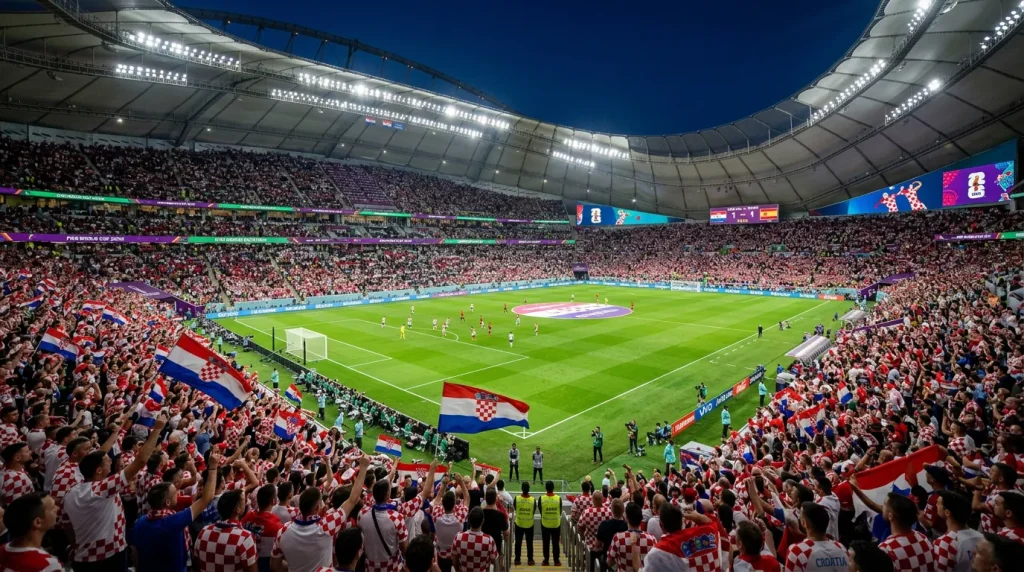
Table of Contents
A country of fewer than four million people has reached the World Cup semi-finals twice in the last three tournaments. That sentence alone should tell you everything you need to know about Croatia’s place in international soccer — and everything you need to know about why they are chronically undervalued in betting markets. I have watched sharp bettors fade Croatia before every major tournament since 2018, reasoning that a small nation cannot sustain elite-level performance indefinitely, and I have watched those same bettors pay for it when Croatia grind through groups, survive penalty shootouts, and emerge on the right side of knockout matches that more talented squads find a way to lose.
For Canadian fans, Croatia carries a specific emotional charge. The Croatian-Canadian community — estimated at 200,000 to 250,000 people, concentrated in Ontario and British Columbia — has maintained deep ties to Croatian soccer culture through clubs, community centres, and family connections that survived the long journey from the Adriatic to the Great Lakes. When Croatia play at a World Cup, Croatian restaurants in Toronto’s west end fill up before noon, and the flags come out on Bloor Street. The 2018 final — Croatia versus France, watched in the early afternoon across Canada — was one of the most emotionally intense sporting moments in Canadian-Croatian history. The 2026 World Cup will bring that intensity even closer.
The Post-Modrić Era — Squad Preview
Every conversation about Croatia at the 2026 World Cup starts and ends with one question: what happens without Luka Modrić at the peak of his powers? Modrić turned 40 in September 2025. He continues to play for Real Madrid in a reduced role — fewer starts, more substitute appearances, but still capable of producing moments that remind you why he won the Ballon d’Or. The question is not whether Modrić can still play at a high level in bursts but whether a 40-year-old’s legs can sustain the demands of a World Cup — seven matches across 39 days in North American summer heat. I have my doubts, and so should any bettor pricing Croatia’s chances.
The coaching staff faces a delicate decision. If Modrić is included in the squad, he becomes the emotional leader, the set-piece taker, the tempo-setter in crucial moments. But he also occupies a roster spot that could go to a younger player with more energy, more pressing capacity, and more minutes in the tank for the knockout rounds. If Modrić is excluded or limited to a bench role, Croatia lose the one player who has defined their tournament identity for the past decade. There is no clean solution — only trade-offs.
Behind Modrić, the squad has evolved. Joško Gvardiol has established himself as one of the best young centre-backs in world soccer, a left-footed defender at Manchester City whose composure on the ball, tactical intelligence, and ability to carry possession out of the back line makes him a modern centre-back archetype. Gvardiol is the player around whom Croatia’s next era is being built — a defensive leader who is comfortable operating in the high-possession system that Croatian coaches favour.
Mateo Kovačić provides midfield experience and quality at Manchester City, though his role for Croatia differs from his club position — he carries more creative responsibility for the national team, often operating as the primary ball progressor in Modrić’s reduced capacity. The midfield trio is completed by younger options from Dinamo Zagreb and other European clubs who offer energy and pressing intensity. The challenge is cohesion: Modrić, Rakitić, Brozović, and Kovačić had years of playing together at the highest level, and the new midfield combinations have not had the same time to develop the instinctive understanding that characterized the 2018 and 2022 squads.
The attacking positions are the area of greatest concern. Croatia have historically relied on midfield dominance rather than individual attacking brilliance — their World Cup runs were powered by midfield control and efficient finishing rather than a star striker’s goals. The current forward options lack the prolific scoring record needed to compensate if the midfield’s grip loosens. If Croatia’s midfield is overrun — as happened in the 2022 semi-final against Argentina — the forwards do not have the individual quality to create goals from nothing. This is the structural weakness that betting markets should price more aggressively than they currently do.
Group L — England, Croatia, Panama, Ghana
I have already covered Group L in detail from England’s perspective, but the view from Croatia’s side is different. For England, Group L is a group to win comfortably. For Croatia, it is a group to survive. The key match is England-Croatia — a fixture with significant recent history. England beat Croatia 1-0 at Euro 2020 in the group stage. Croatia beat England in the 2018 World Cup semi-final with a Mandžukić extra-time winner that remains one of the most painful moments in recent English soccer history. The psychological ledger between these two teams is balanced, which means the 2026 match will be decided by tactical preparation and on-the-day performance rather than historical momentum.
Croatia’s strategy in Group L should be straightforward: beat Panama and Ghana, and then play for a draw against England if a point is enough to qualify. The problem with this approach is that Panama and Ghana are not guaranteed victories. Ghana, in particular, bring the kind of physical intensity and pace that Croatia have historically struggled against. Croatian defenders prefer organized, positional play — they are less comfortable when opponents run at them with directness and speed. If Ghana press high and commit bodies forward, Croatia’s defensive line could be stretched in ways that expose their aging centre-back options alongside Gvardiol.
Panama are the weakest team in the group, but their CONCACAF qualifier experience means they understand how to defend deep and frustrate more talented opponents. A 0-0 draw at half-time against Panama would create genuine anxiety in the Croatian camp, and anxiety is the enemy of the possession-based game that Croatia need to play. The first 20 minutes of Croatia-Panama will tell you everything about Croatia’s tournament: if they score early, they cruise; if the match stays tight, expect nerves.
The third-place qualification pathway is Croatia’s safety net. Even if they finish third in Group L — behind England and potentially Ghana — the expanded format allows the eight best third-placed teams to advance to the Round of 32. Croatia’s head-to-head record and goal difference against Panama and Ghana should be strong enough to qualify as one of those eight teams, but relying on third-place qualification is a sign of vulnerability, not strength. For bettors, Croatia to qualify from Group L (regardless of position) is priced around 1.55 to 1.75, and I think that is approximately fair given the uncertainties around the squad.
Croatia’s Betting Odds and Value
Croatia’s outright winner odds sit between 30.00 and 40.00, reflecting their status as an outside contender rather than a genuine favourite. This pricing represents a significant drift from their 2022 World Cup odds (around 20.00 to 25.00), which reflects the market’s assessment that the generational transition has weakened the squad. I think the drift is justified — Croatia in 2026 are not as strong as Croatia in 2022 or 2018 — but the magnitude may be slightly excessive. A team that has reached the semi-finals twice in three tournaments carries institutional knowledge and tournament DNA that odds models undervalue. At 40.00, Croatia are a speculative bet worth a small stake. At 30.00, the value is thin.
The group-stage markets offer more interesting angles. Croatia to finish second in Group L is priced around 2.50 to 3.00, which implies a 33-40% probability. My model puts it closer to 35%, so the higher end of that range (3.00) offers marginal value. Croatia to finish top of Group L — above England — is priced at 5.00 to 6.00, which is too long in my view. If Croatia beat England head-to-head, they are live for first place, and the 2018 semi-final result shows they are capable of exactly that. At 5.50 or above, it is worth a half-unit speculative bet.
The match-specific markets for England-Croatia will be the most liquid and heavily traded of any Group L fixture. I expect the “both teams to score” market to offer value — England and Croatia have scored in all of their recent competitive meetings, and the attacking talent on both sides makes a clean sheet for either team unlikely. The under/over line will be set around 2.5, and I lean to the under based on Croatia’s tendency toward controlled, possession-heavy matches that suppress shot volume. A 1-0 or 1-1 result is the most likely scoreline range.
The Croatian-Canadian Soccer Bond
Croatian-Canadian soccer culture runs deeper than most heritage connections. Toronto Croatia SC, founded in 1956, was one of the first ethnic soccer clubs in Canada and played a significant role in the development of organized soccer in Ontario. The club — which competed under various names in the Canadian Soccer League and its predecessors — served as both a sporting institution and a community anchor for Croatian immigrants navigating a new country. Its legacy persists in the Croatian community’s engagement with soccer at every level, from youth academies to national team support.
The Croatian-Canadian connection is also visible in player development. Several players of Croatian descent have represented Canada at various age levels, and the overlap between the two soccer cultures creates a unique dynamic: Croatian-Canadians root for Croatia at the World Cup while also supporting Canada, sometimes in the same tournament. The 2026 World Cup, with Canada and Croatia in different groups, allows this dual allegiance to coexist peacefully — at least until a potential knockout-round meeting, which the bracket structure makes possible in the later rounds.
For bettors in the Croatian-Canadian community, the temptation to overbet Croatia is real. The emotional connection is powerful, and the memories of 2018 — Modrić lifting the Golden Ball, Mandžukić’s extra-time winner against England, the team of four million competing in a World Cup final — create a nostalgic pull that inflates perceived probabilities. My advice: acknowledge the emotion, enjoy the matches, and confine your Croatia bets to specific markets where the data supports the price. Group qualification (at 1.70 or above), the England-Croatia “both teams to score” market, and Gvardiol’s prop bets are the sharpest opportunities. The outright winner market is a sentimental play, not an analytical one.
Croatia’s Ceiling and Floor in 2026
Croatia’s floor is a group-stage exit — third behind England and Ghana, with the third-place calculation going against them. Their ceiling, if the midfield transition works and Modrić produces one final masterclass, is a quarter-final run that mirrors their 2022 trajectory. The most likely outcome is somewhere between: qualification from Group L in second or third place, followed by a Round of 32 match against a beatable opponent, and then a quarter-final against a top-tier team that ends the run.
The broader lesson of Croatia at the 2026 World Cup is about the limits of tournament pedigree. Pedigree matters — it gives a squad the psychological resilience to handle pressure, the tactical maturity to navigate tight matches, and the institutional knowledge of what it takes to win knockout games. But pedigree alone cannot overcome a declining squad. The 2026 version of Croatia is less talented than the 2018 or 2022 versions, and the odds should reflect that. Whether they do — and whether the market has overcorrected — is the betting question that every Croatian-Canadian fan should ask before placing their wager.
